
Someone has to hold the day together.
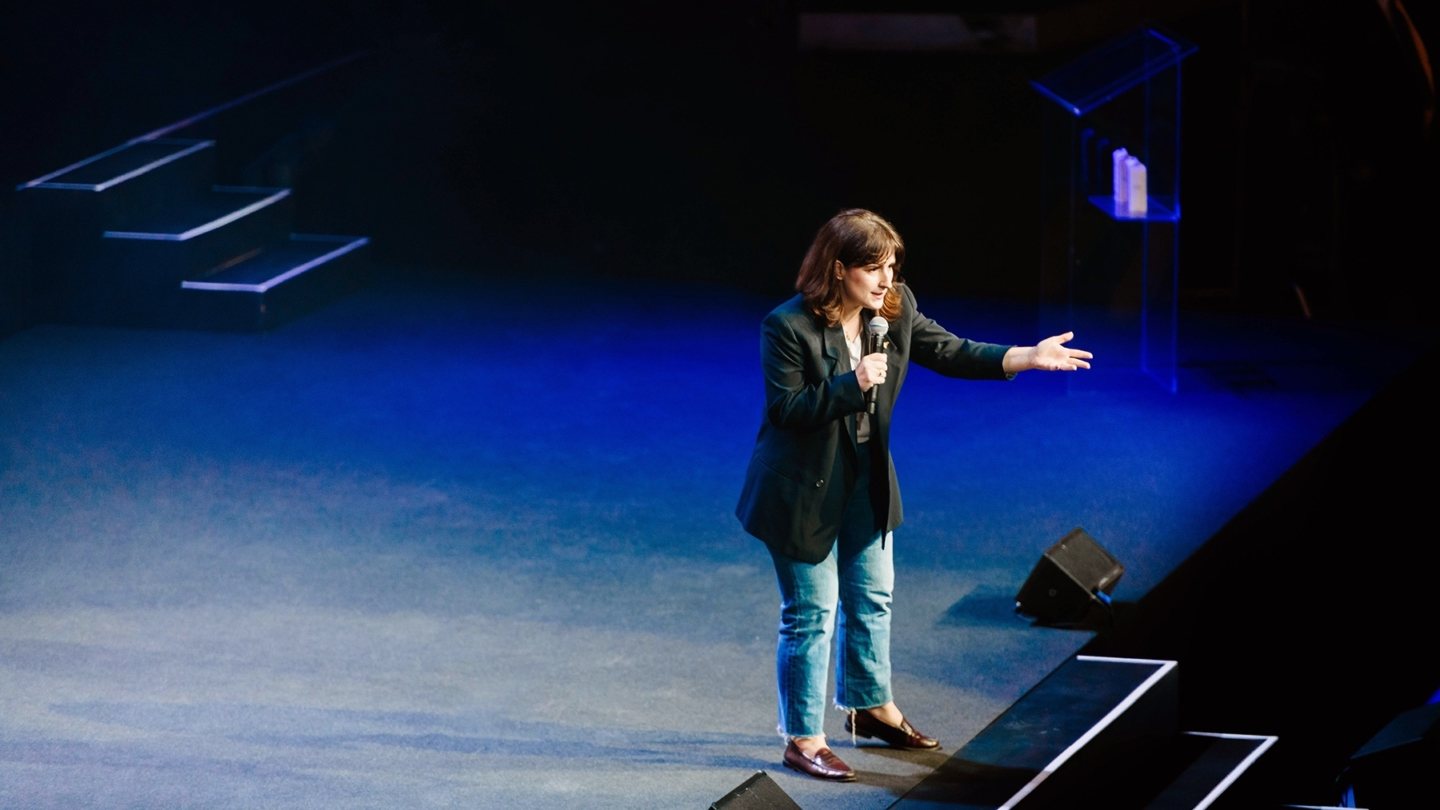
Event hosting means I shape your all-hands, offsite, or launch and then emcee the day: the opening, every introduction, the transitions, the recovery when something slips, and the close. I work with your internal speakers beforehand so their sessions start well. A day hosted in person starts at $5,000.
The content is usually fine. What goes wrong is everything between the content.
The room comes back from lunch flat. A speaker runs 12 minutes long and the next one gets cut. Someone opens with an apology for their slides. The people dialling in stop paying attention around the second session and never come back. By the time the message everyone travelled for arrives, half the room is on a laptop.
Most companies solve this by asking a VP who is funny in meetings to run the day. That person has a real job, no preparation time, and no training for this.
Most of the work happens before anyone is in the room.
What goes where, and what gets cut
Order decides how much of the day people actually keep. Two heavy sessions back to back lose the room, and the thing you most need heard shouldn’t be the last item before lunch.
The first thirty seconds
Most internal presenters have never been coached and it shows immediately. A short working session beforehand changes how their session opens, which changes everything after it.
The opening, the handoffs, the close
This is what turns a stack of separate talks into one day with a point, and it’s usually the part nobody is assigned.
It’s the same work as the workshops, pointed at one event instead of a room of people. You can also hand me a day that’s already built and I’ll host it.
“If you whisper that we need to stall for 5 minutes because the speaker is late, I handle that.”
Ashley England
Every event has a moment that wasn’t on the run sheet. A speaker is stuck in traffic, a laptop won’t connect, a session finishes 10 minutes early and there’s nothing to fill it with. Someone has to stand in front of the room and make that feel deliberate.
I trained at Second City and Upright Citizens Brigade and I’ve directed theater. Reading a room and changing course inside it is what I’m trained to do.
Any day where the agenda matters more than any one session.
The message has to land
Leadership has something important to say and one shot at saying it to everyone at once. The room needs to be warm before that moment, not after it.
A full day, or several
The hardest format, because energy has to survive lunch, an afternoon, and a room full of people who travelled to get there.
Momentum is the product
People should leave talking about the thing rather than about how long the day ran.
It also works in the other direction. If I’m already in the building to host your day, running a workshop while I’m there costs you a flight you have already paid for.
The things people ask first.
What happens if a speaker is late or a session runs over?
If you need 5 minutes stalled, it gets stalled, and the room doesn’t feel the seam. If a session runs 12 minutes long, the time comes back from somewhere the audience won’t notice.
Can you help build the day, not just host it?
Yes, and it’s usually the better version. I can shape the agenda, work with your speakers beforehand, and write the material that connects the sessions. Hosting a day someone else built works fine. Hosting one I helped shape works better.
What does it cost?
A day I host in person starts at $5,000. What moves the number is how long the agenda runs, where it is, and how much of the day I’m building with you rather than hosting on arrival. More on pricing.
Do you need the agenda in advance?
Yes, and the earlier the better. Knowing who is speaking, what they’re covering, and what you need people leaving with is what makes the introductions land instead of sounding like a reading of the program.
Can you run a workshop at the same event?
Often the best use of the day. Hosting puts me in front of everyone, and a workshop for a smaller group while I’m already there is the cheapest session you’ll ever buy, because the travel is already covered.
Is this the same as a keynote?
No. A keynote is one talk. Hosting is the whole day: the opening, every introduction, every transition, the recovery when something slips, and the close.
Tell me about the day.
Tell me who the team is and what you want them doing differently. I build the session around those answers, and then read the room on the day.